


For this week's assignment, I chose to analyze Chibi Lights.
Initially, I wanted to explore the BoseBuild Speaker Cube because I was curious about its instructions for using audio devices. However, I wasn’t able to use the app since it was outdated.
Instead, I selected Chibi Lights, as I used to enjoy making paper circuits with my students. I first encountered this kit during a T550 morning activity and was amazed by the simplicity and convenience of making circuits with it.

For this assignment, I determined to explore more about the provided learning material - the guidebook.
Strong Design Principle : Scaffolding
This guidebook is strong with its incremental scaffolding. It used some specific strategies as follows:


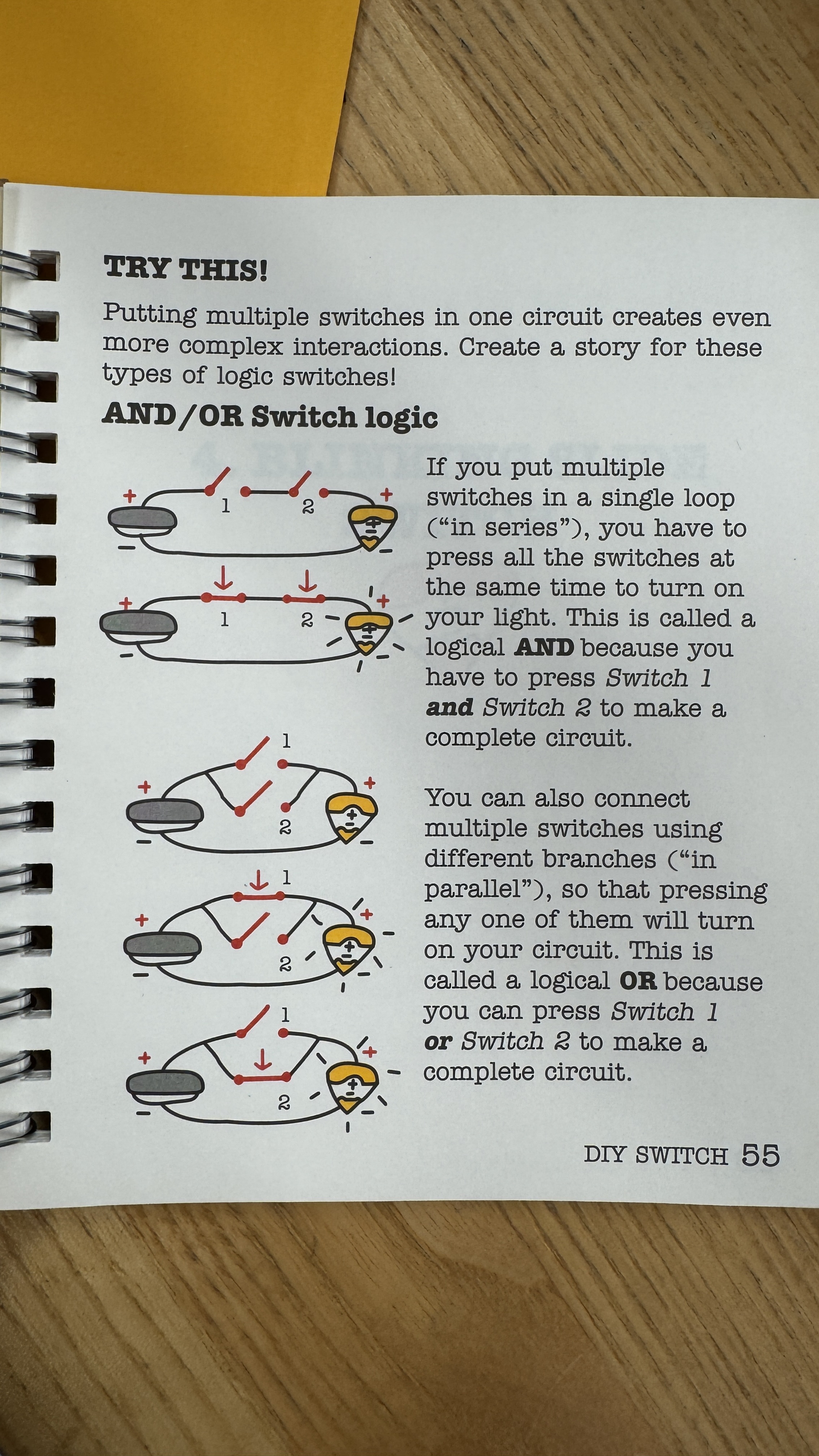
- First, the activities start with making simple circuits and gradually increase in complexity.
- Second, the materials—copper tape, a battery, and one or more modules—remain consistent across different stages. Concepts such as parallel connections or switch logic are introduced as the activities progress. Since the differences between activities are limited to a few elements, such as the positions of the copper tapes or the number of modules, the cognitive load that learners experience is subjectively low.

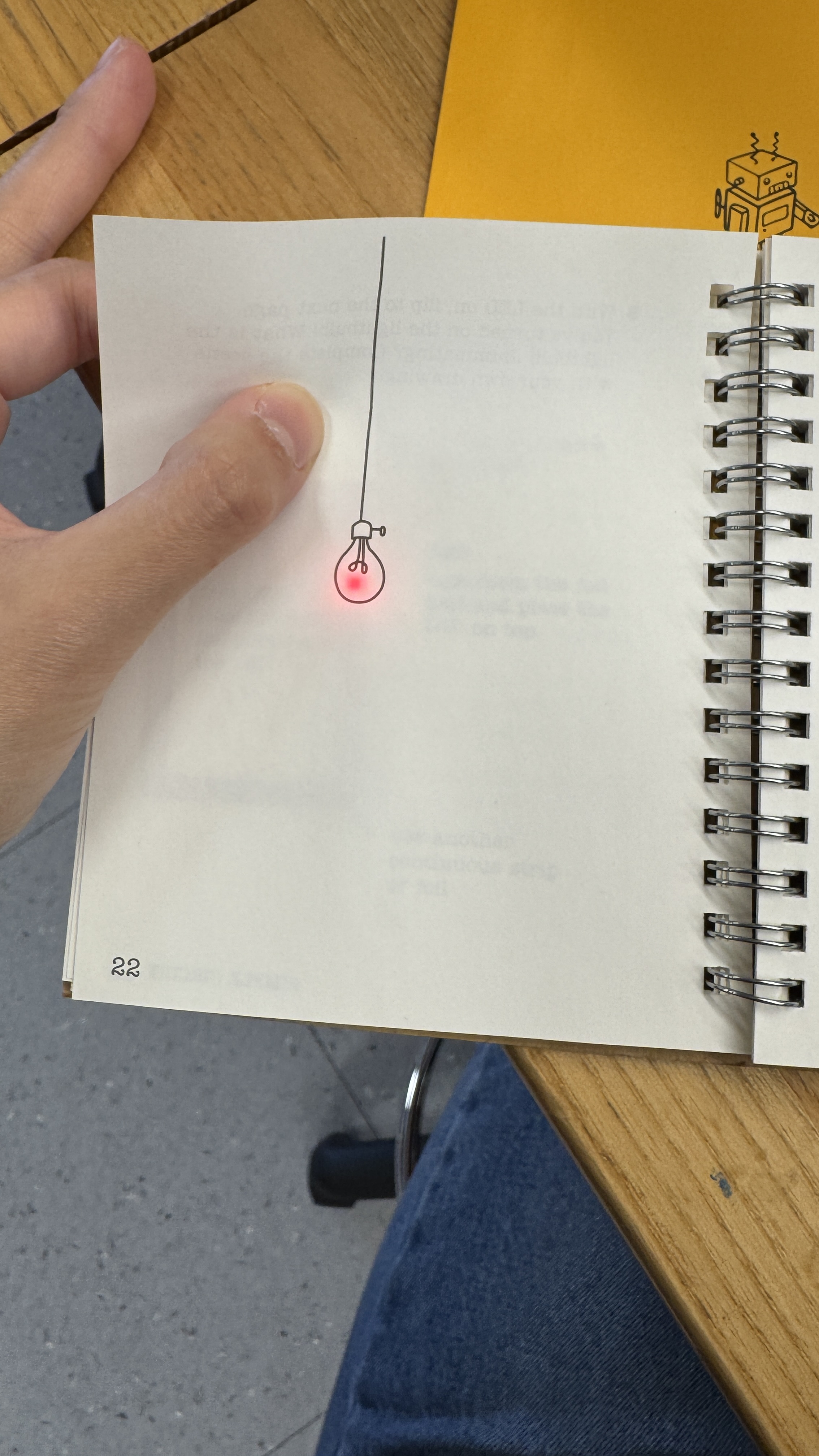
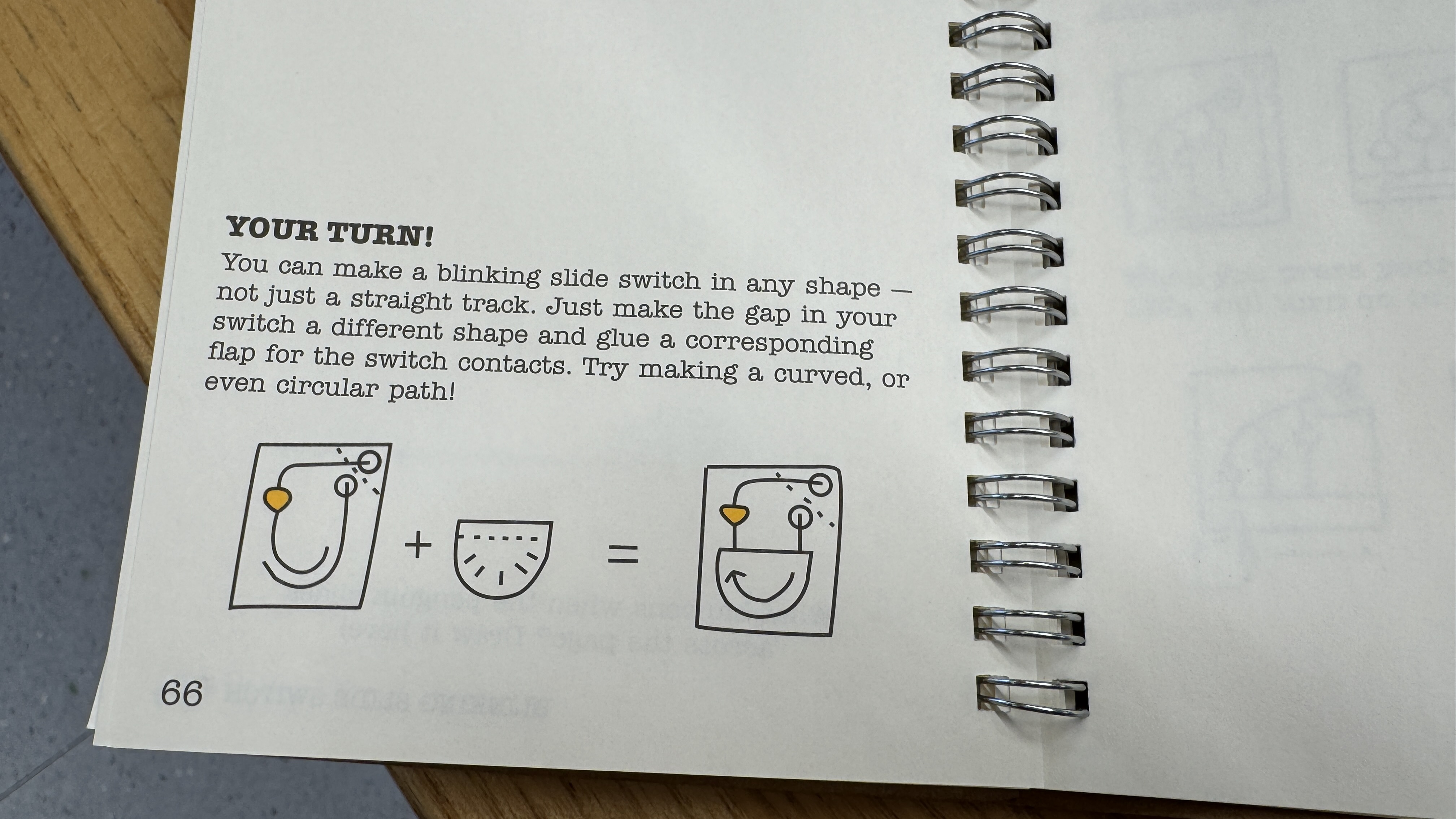
3. Third, the kit provides models that students can easily follow, as well as pages where they can experiment freely. This not only minimizes the need for assistance as students become more familiar with the concepts and circuit structures, but also offers opportunities for learners to exercise agency.
After building a model circuit, the guidebook prompts, "What comes to life when you ~? Draw it on this page!" It provides space for learners to personalize their circuits by connecting them with concrete images. Then, it dedicates a whole page for the learner to create their own circuit design. It would be even better if there were an additional page to elaborate on or document the freely designed circuit.
Weak Design Principle : Getting Comfortable with Being Uncomfortable
One limitation of this kit is that it does not allow learners to go beyond the provided materials. It might be a good strategy to focus on a limited set of information so that the learner does not feel overwhelmed. This strategy can make it easier for the learner to embark.
On the other hand, it would be beneficial if the guidebook offered more chance for the learner to challenge himself or herself. It could use strategies such as linking each circuit with real-life objects. For instance, it may ask questions like this with the switch circuit - "Where do you think this circuit is used in our lives? I can give you an example of a flash light. Well, the street light that turns on at night also works with something acting as a switch. What would be the difference between day and night? What can work as switches?"
Also, it may give more complicated missions or problems. It may give space for the learner to build their own solutions by making the answers harder to access, using QR codes or just leaving links. Such intended inconvenience would offer valuable opportunities for the learner to think independently.
'STUDY > Ed.M.' 카테고리의 다른 글
| [T519] Final Project - City Mapper (1) | 2025.12.15 |
|---|---|
| [T519] Processing Track (1) : Forest of Memory (0) | 2025.10.31 |
| [T519] Dream Toy Project(4): Final (0) | 2025.10.24 |
| [T519] Dream Toy Project(3): Developing prototypes (0) | 2025.10.13 |
| [T519] Dream Toy Project(2): Prototyping (0) | 2025.10.06 |


댓글